

FROM RAW MATERIAL VARIATION TO A CONTROLLED PRODUCT FLOW
Crayfish arrive with natural differences in size, shell condition, cleanliness, and meat yield. Those differences affect washing intensity, cooking response, peeling efficiency, cooling time, and package consistency. A well-planned process therefore begins by separating unsuitable raw material and stabilizing the feed before the product enters water, heat, and refrigeration stages.
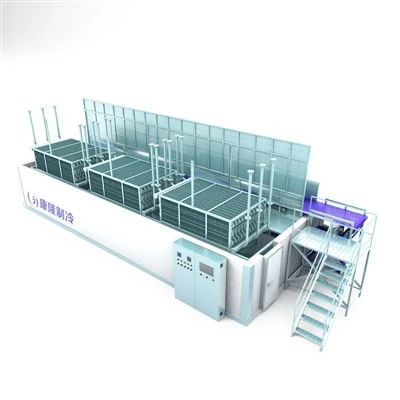
A configurable Crayfish Processing Line can combine sorting, inspection conveying, manual or assisted peeling, conditioning tables, bubble washing, continuous blanching or cooking, normal-water cooling, ice-water cooling, air-assisted drainage, spiral quick freezing, ice glazing, re-freezing, and automatic packing. Whole-product and tail-meat routes can share selected modules while using different handling, temperature, and residence-time settings.

YIELD, HYGIENE, AND COLD-CHAIN BENEFITS
1. Size-Based Process Stability: Early grading creates more uniform batches, making downstream cooking and cooling easier to control.
2. Purposeful Hygiene Zoning: Raw reception, washing, manual preparation, cooked-product handling, and frozen-product areas can be arranged as separate operating zones.
3. Flexible Product Preparation: Peeling, trimming, conditioning, and inspection stations can be selected for whole crayfish, tails, or peeled meat.
4. Managed Thermal Transition: Continuous cooking followed by staged water cooling limits unnecessary carryover heat and prepares the product for freezing.
5. Lower Surface-Water Load: Blow-drying and drainage reduce free water before the freezer, helping control ice buildup and product adhesion.
6. Protective Glazing Route: A measured ice coat followed by re-freezing helps stabilize the glaze before weighing, packing, and frozen storage.
7. Scalable End-of-Line Automation: The system can connect with inspection, metal detection, weighing, bagging, cartoning, coding, and cold-store conveyors.


APPLICATIONS
The Crayfish Processing Line can be engineered for cooked whole crayfish, frozen crayfish tails, peeled tail meat, and selected seasoned or portioned crawfish products. The reference arrangement includes grading, conveying, preparation, bubble washing, continuous blanching, two-stage cooling, blow-dry drainage, spiral freezing, ice glazing, re-freezing, and packing. Equipment selection depends on species, raw-material condition, product form, target cook level, glaze ratio, hourly capacity, package size, utilities, sanitation plan, and available factory space.
REFERENCE PROCESS MODULES
|
Process Stage |
Typical Equipment |
Production Purpose |
|
1. Receiving and Grading |
Feed hopper, sorter, and inspection conveyor |
Stabilizes product flow and separates crayfish by suitable size or condition. |
|
2. Manual Inspection |
Sanitary selecting conveyor |
Removes foreign material, damaged product, and unsuitable raw material before wet processing. |
|
3. Peeling or Preparation |
Manual or assisted preparation station |
Prepares whole crayfish, tails, or peeled meat according to the finished-product specification. |
|
4. Conditioning |
Trimming and inspection tables |
Provides controlled workspace for cleaning, trimming, and product-form verification. |
|
5. Bubble Washing |
Bubble washer with circulation and spray rinse |
Loosens surface contamination and rinses prepared crayfish with gentle water movement. |
|
6. Thermal Processing |
Continuous chain blancher or cooker |
Applies the required cooking treatment under controlled conveyor residence time. |
|
7. Initial Cooling |
Normal-temperature water cooler |
Removes the main post-cooking heat load and begins stopping further thermal effect. |
|
8. Deep Cooling |
Ice-water cooler |
Reduces product temperature further before drainage and quick freezing. |
|
9. Drainage and Blow Drying |
Air-knife or fan drying conveyor |
Removes carryover water and lowers the surface-moisture load entering the freezer. |
|
10. Primary Freezing |
Spiral quick freezer |
Provides continuous residence time for rapid freezing in a compact production footprint. |
|
11. Ice Glazing |
Glazing conveyor or immersion/spray system |
Applies a controlled protective ice layer to suitable frozen products. |
|
12. Glaze Setting |
Re-freezing tunnel |
Freezes and stabilizes the glaze before downstream handling. |
|
13. Final Packing |
Inspection, weighing, packing, and coding system |
Prepares finished packs for cartoning, palletizing, and frozen storage. |
Q&A
Q: Which crayfish products can the line handle?
A: It can be configured for cooked whole crayfish, frozen tails, peeled tail meat, and selected seasoned or portioned crawfish products.
Q: Why is grading recommended before cooking?
A: More consistent size groups receive more uniform heat treatment and cooling, which supports stable texture, yield, appearance, and pack weight.
Q: Can the same project include whole-crayfish and peeled-tail routes?
A: Yes. Shared washing, cooling, freezing, and packing modules may be combined with separate preparation paths and product-specific settings.
Q: What is the role of the continuous blancher or cooker?
A: It applies controlled thermal treatment according to product size and the required cook level. Belt speed, water or steam conditions, and residence time are confirmed during engineering.
Q: Why are normal-water and ice-water coolers used in sequence?
A: The first stage removes the main heat load, while the colder second stage lowers product temperature further before drainage and freezing.
Q: Why is the product re-frozen after ice glazing?
A: Re-freezing sets the newly applied glaze so it remains stable during weighing, packing, handling, and frozen storage.
Q: How is cleaning considered in the line design?
A: Sanitary materials, accessible frames, drainage, removable contact parts, and appropriate separation between raw and cooked zones are considered for each layout.
Q: What information is required for a technical proposal?
A: Please provide the crayfish species and size range, incoming condition, finished-product form, target capacity, cook requirement, glaze ratio, package, utilities, working schedule, and plant layout.
Hot Tags: crayfish processing line, China crayfish processing line manufacturers, suppliers, factory, Crayfish Processing Line, Potato Chips Production Line, Potato Processing Line, Potato Production Line, Roasted Eel Processing Line