



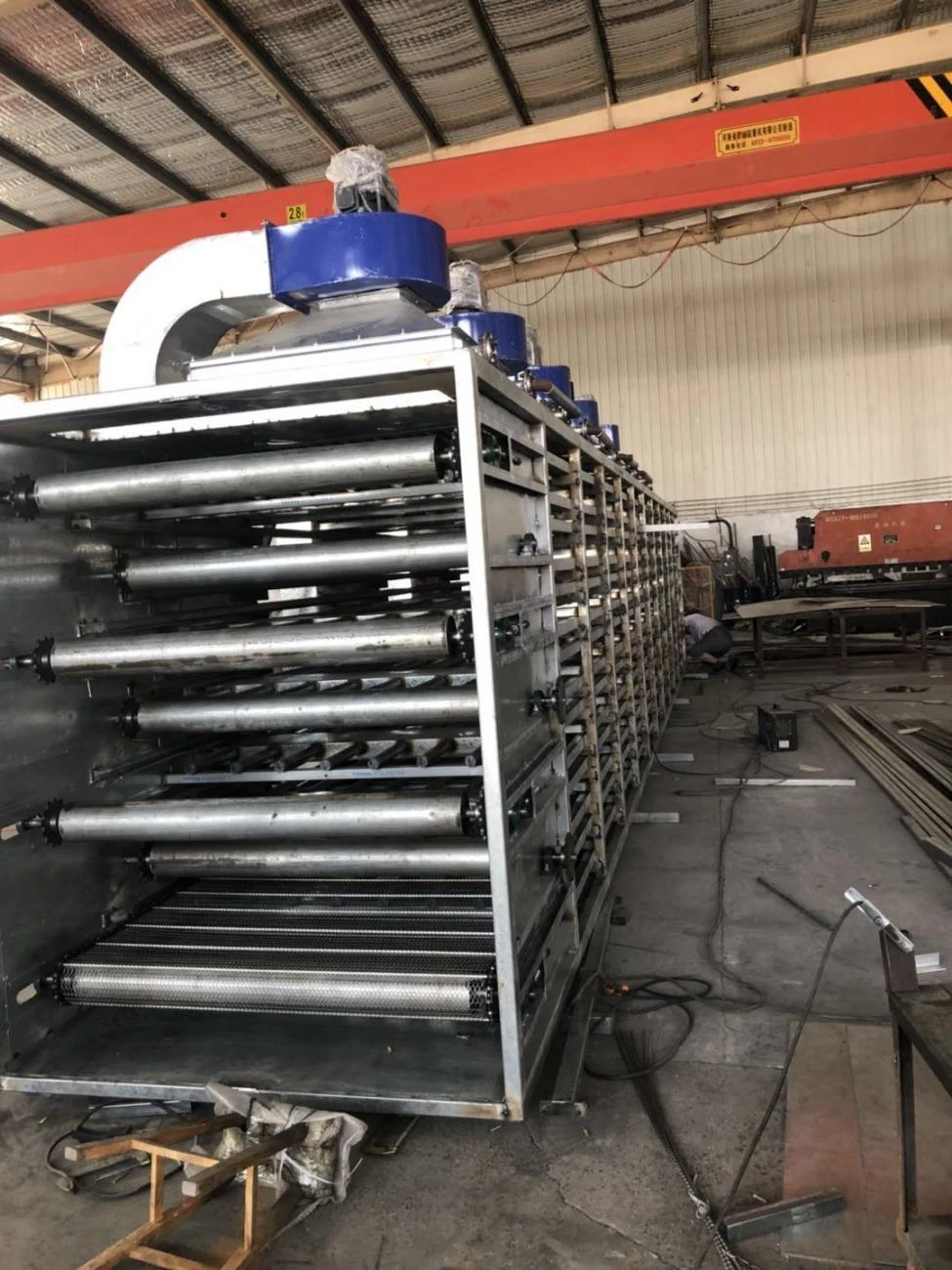
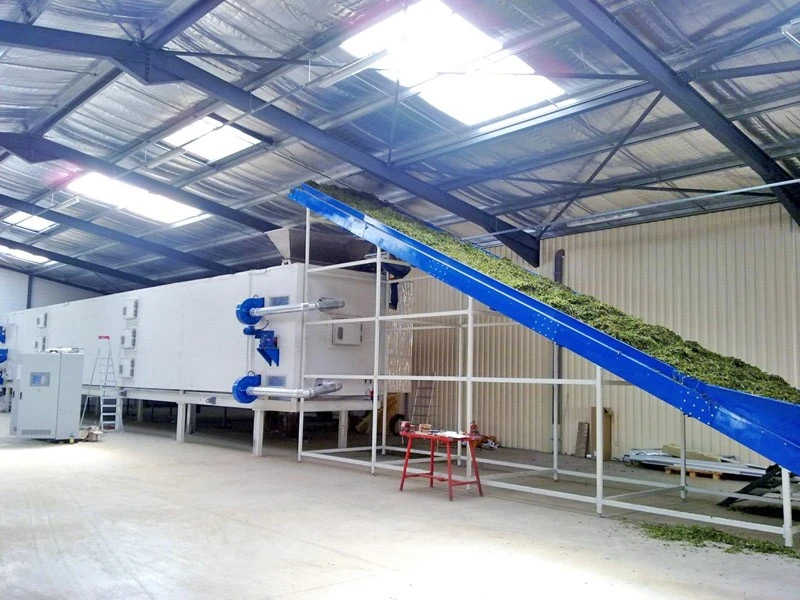
A well-designed mesh-belt drying system gives processors stable control over temperature, airflow, humidity, belt speed, and product residence time. Material passes continuously through independent zones, allowing each stage to use conditions suited to the product. Uniform air distribution reaches both sides of the material layer, improving moisture consistency and reducing the risk of over-drying or wet spots. Gentle conveying also protects fragile pieces because products remain on the belt instead of being repeatedly lifted, dropped, or turned.
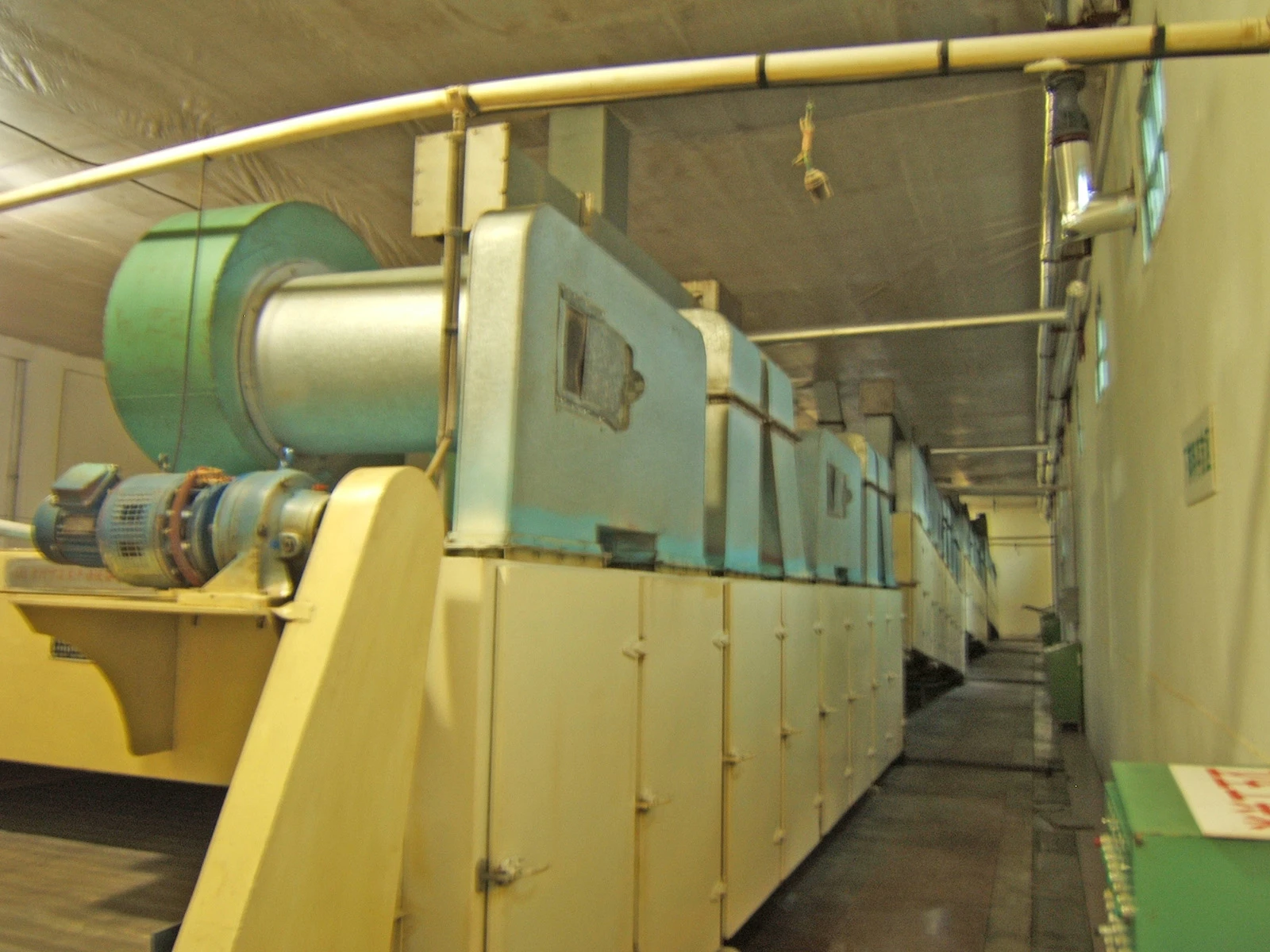
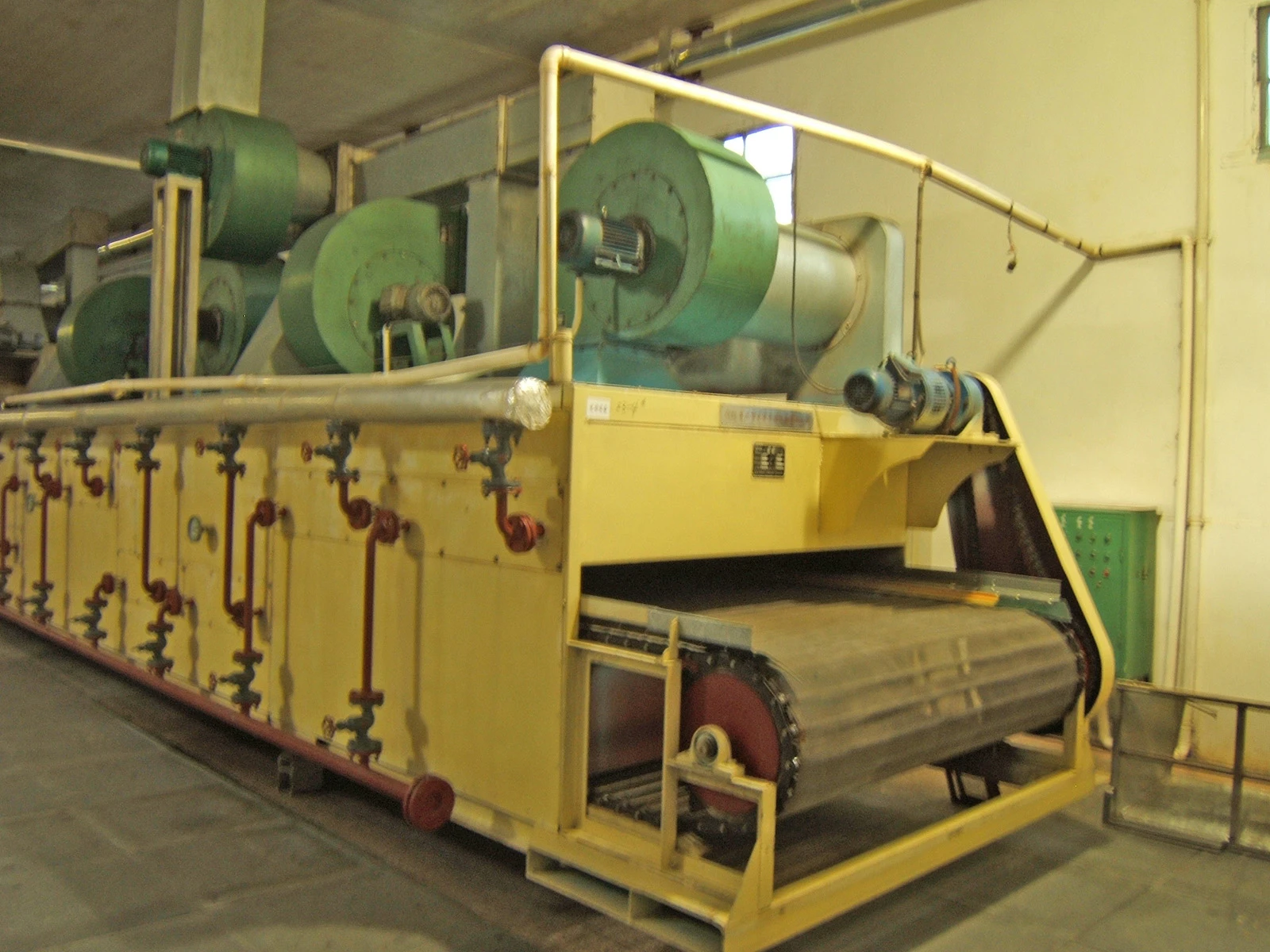
The Mesh Belt Dryer can be tailored to customer products, capacity, plant layout, and sanitation requirements. Engineers can adjust belt width, number of temperature zones, feeding method, discharge position, and access arrangement. Easy-to-open panels and accessible internal areas support routine inspection and cleaning. Modular sections simplify transport and installation, while optional factory pre-assembly reduces site work. These features create a practical system with dependable performance, convenient maintenance, and room for future production changes.
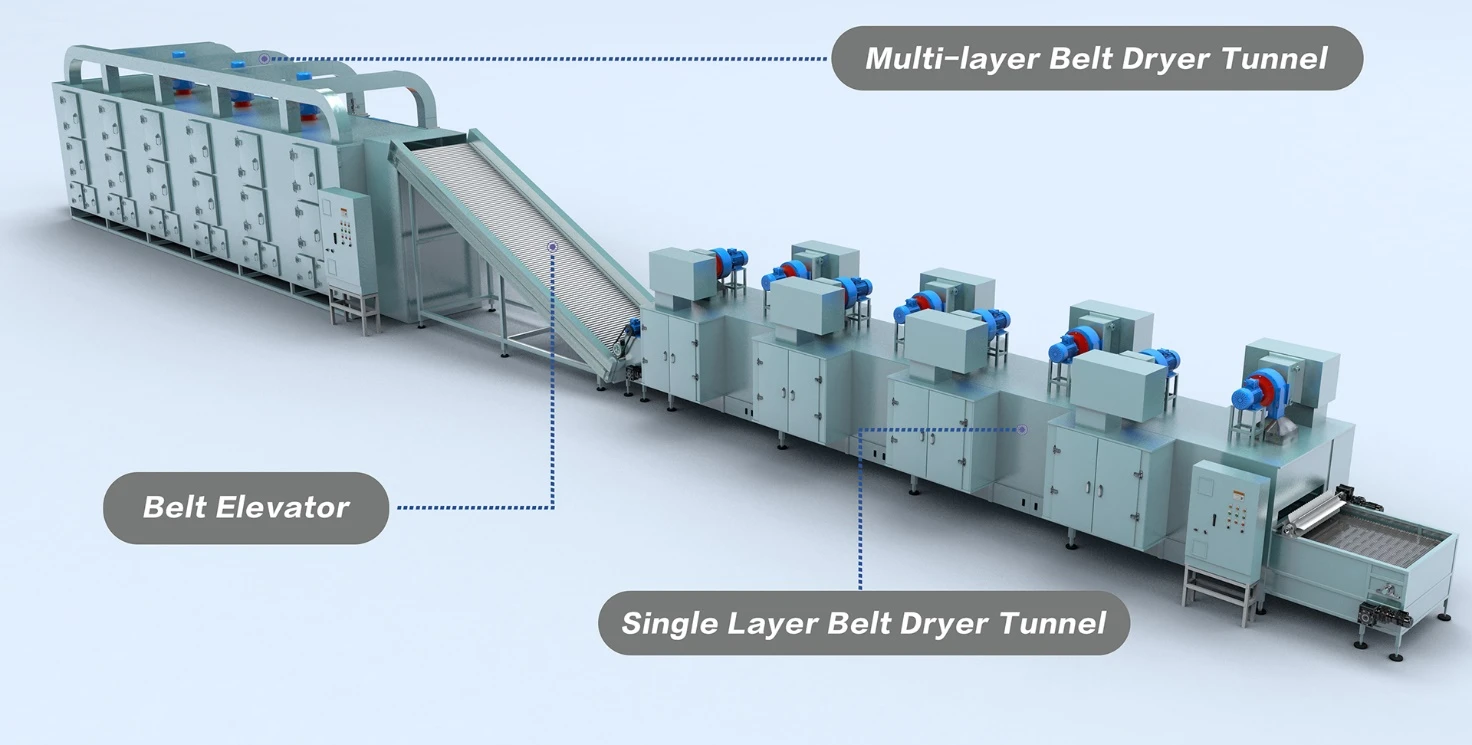
SPECIFICATIONS
|
|
HS-II-1.6-I Feed Section |
HS-II-1.6-II Mid Section |
HS-II-1.6-III Discharge Section |
HS-II-2-I Feed Section |
HS-II-2-II Mid Section |
HS-II-2-III Discharge Section |
|
Width of Belt (m) |
1.6 |
1.6 |
1.6 |
2 |
2 |
2 |
|
Length of Drying Section (m) |
10 |
10 |
10 |
10 |
10 |
8 |
|
Material Layer Thickness (mm) |
≤100 |
≤100 |
≤100 |
≤100 |
≤100 |
≤100 |
|
Temperature (°C) |
50–150 |
50–150 |
50–150 |
50–150 |
50–150 |
50–150 |
|
Heat Exchange Area (m²) |
525 |
398 |
262.5 |
656 |
497 |
327.5 |
|
Steam Pressure (MPa) |
0.2–0.8 |
0.2–0.8 |
0.2–0.8 |
0.2–0.8 |
0.2–0.8 |
0.2–0.8 |
|
Drying Time (h) |
0.2–1.2 |
0.2–1.2 |
0.2–1.2 |
0.2–1.2 |
0.2–1.2 |
0.2–1.2 |
|
Power (kW) |
0.75 |
0.75 |
0.75 |
0.75 |
0.75 |
0.75 |
|
Overall Dimensions (m) |
12 × 1.8 × 1.9 |
12 × 1.8 × 1.9 |
12 × 1.8 × 1.9 |
12 × 2.4 × 1.92 |
12 × 2.4 × 1.92 |
12 × 2.4 × 1.92 |
APPLICATIONS
Typical applications include dehydrated fruits and vegetables, French fries, grains, cereals, herbs, seasonings, snack foods, noodles, seafood, meat pieces, and small prepared products. Flakes, strips, granules, and other materials with suitable air permeability can be spread evenly with a rotary feeder. Granulation or extrusion equipment can prepare certain pastes and filter cakes before drying. Mixers and scrapers can then transfer the finished material smoothly to cooling, inspection, or packaging.
With suitable process settings, the Mesh Belt Dryer may also serve as an oven, roaster, toaster, or cooler. It can connect with washing, cutting, blanching, frying, seasoning, and packaging equipment to form a continuous line. This versatility makes it useful for manufacturers that process several products on one system and need consistent quality, sensible energy use, straightforward sanitation, and flexible production planning.

Q&A
Q: What are the main advantages of a belt dryer tunnel?
A: It provides continuous production, uniform drying, adjustable processing conditions, gentle product handling, and efficient energy use.
Q: Can the drying time and production capacity be adjusted?
A: Yes. Belt speed, material loading, airflow, and temperature can be adjusted according to the required capacity and moisture content.
Q: Is the belt dryer tunnel easy to clean and maintain?
A: Yes. Accessible doors, removable components, and stainless-steel construction simplify cleaning, inspection, and routine maintenance.
Q: What information is needed to select a suitable model?
A: Please provide the product type, initial and final moisture, required capacity, drying temperature, available heat source, and installation space.
Hot Tags: mesh belt dryer, China mesh belt dryer manufacturers, suppliers, factory, Belt Dryer, Belt Dryer In Food Industry, Conveyor Belt Dryer, Conveyor Dryer, Hot Air Conveyor Dryer, Vacuum Belt Dryer


